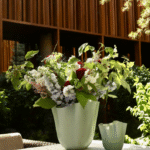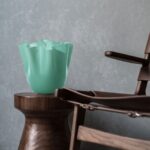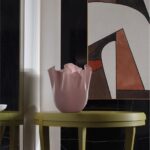


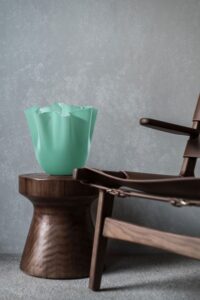
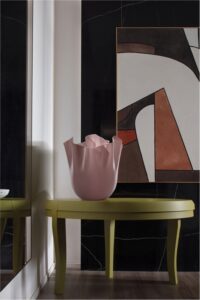
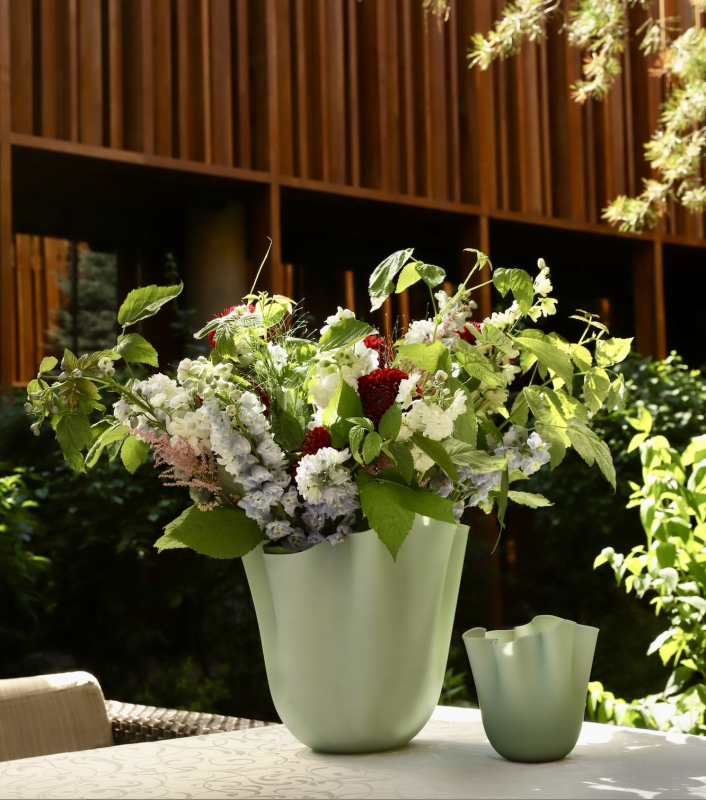
FAZZOLETTO vase-sculpture by FULVIO BIANCONI and PAOLO VENINI in 1948. The “FAZZOLETTO” was born from the collaboration between FULVIO BIANCONI and PAOLA VENINI with a soft shape and a wavy and moved hem, always unique, obtained with the flying hand technique.The vase-sculpture, which has become a timeless icon and entered the permanent collection of the MoMA in New York, is made from blown glass by what is known as the “flying hand” technique.The term free-hand (in Italian, “mano volante”, literally ‘flying hand’) indicates the swift and expert movement of the master glassmaker’s hand as he hot works a precious piece of glass.
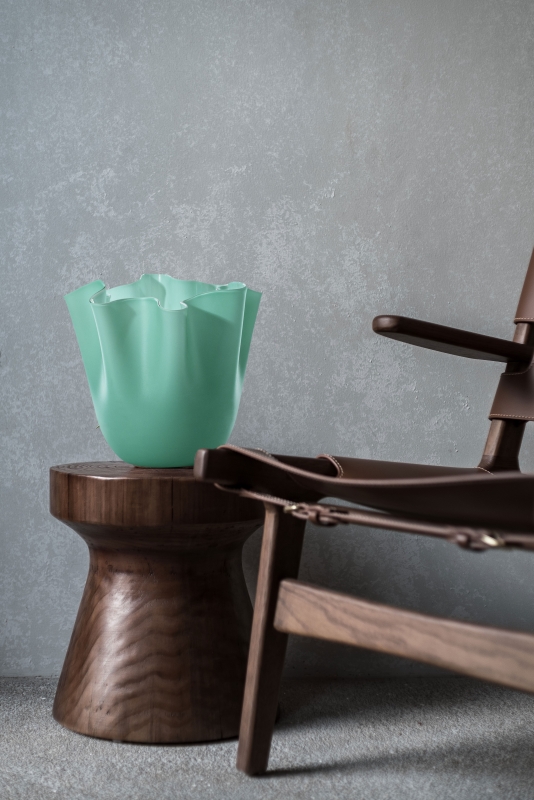
FAZZOLETTO vase-sculpture by FULVIO BIANCONI and PAOLO VENINI in 1948.
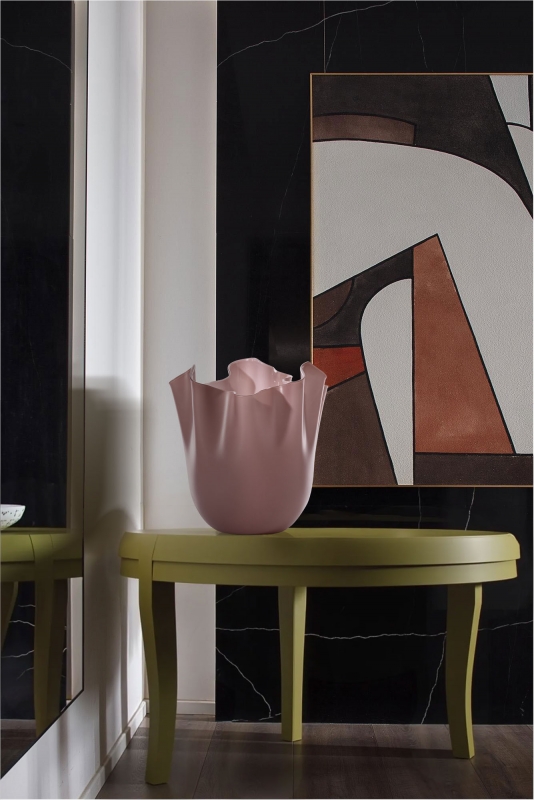
by FULVIO BIANCONI and PAOLO VENINI in 1948.
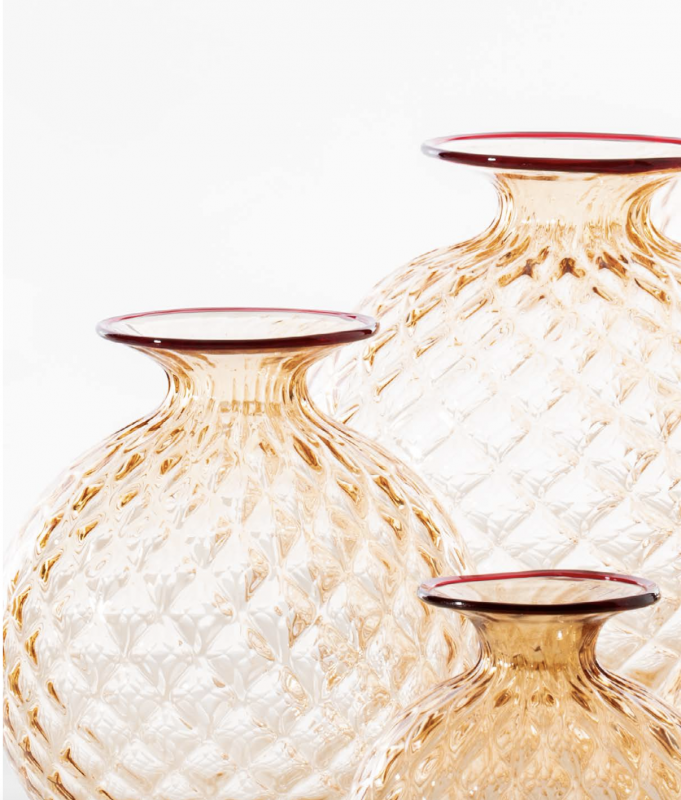
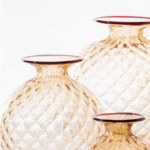
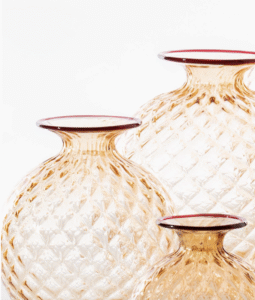
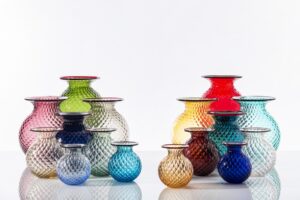
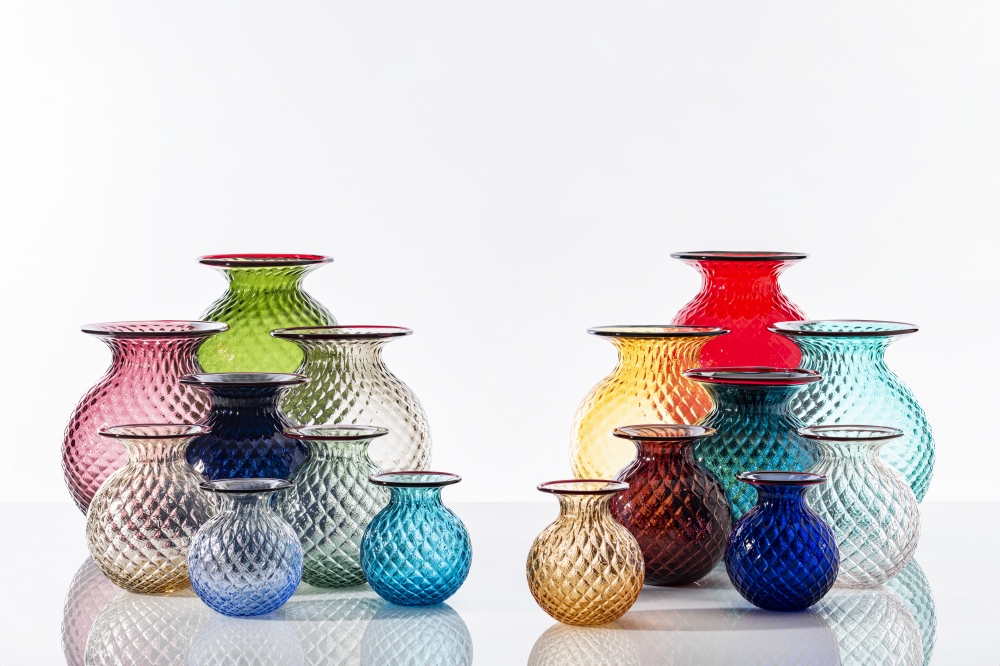
MONOFIORE BALLOTON vase, designed by VENINI,1970. It looks soft, but it’s glass. The optical illusion is couched in its name: Balloton, the traditional glassblowing technique that recreates the matelass√© look on the surface. A fine lip in a contrasting colour hot-worked around the mouth of the vase shows the glassworks‚Äô signature style.Small vials, like ancient treasures that have been discovered in unknown places. Perhaps in the room of a refined woman from the past, a lover of beauty and fragrance. These blown glass ampoules with caps have the delicacy of personal belongings, with details that appear like curious florets blooming upward.
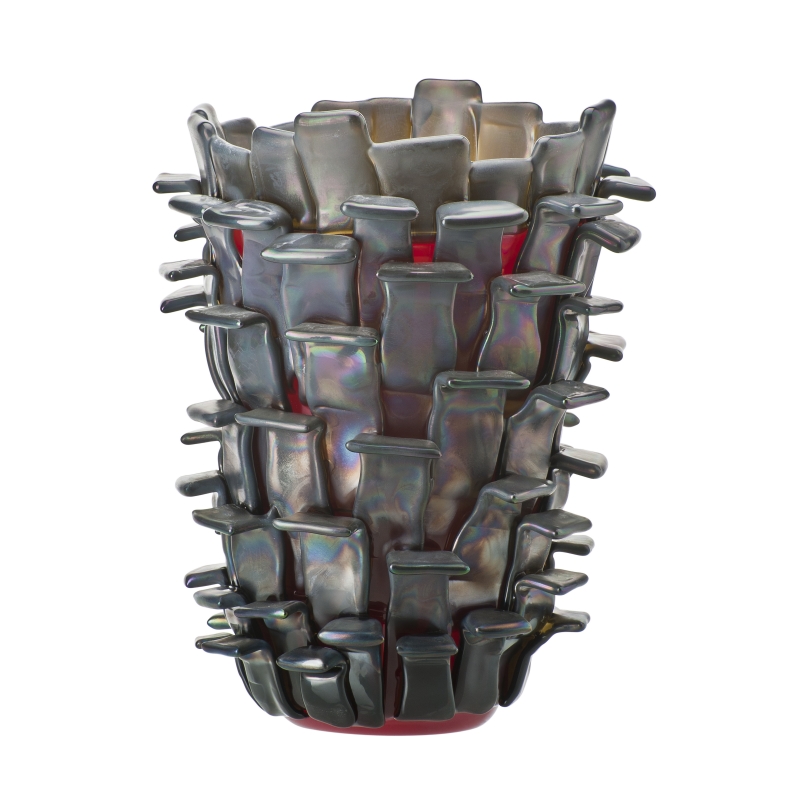
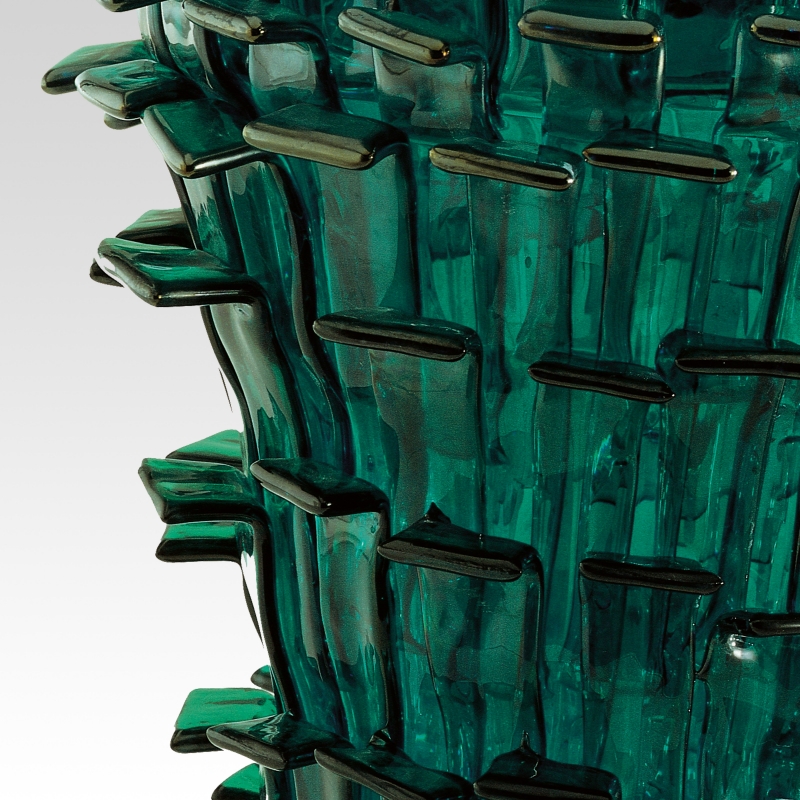
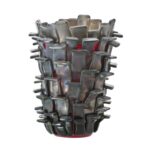
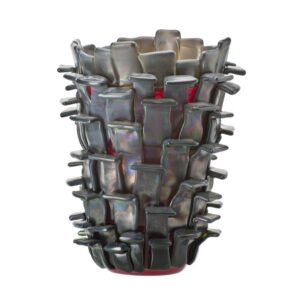
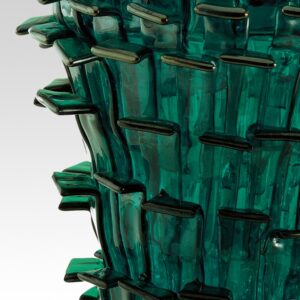
RITAGLI (‘Scraps’) uses a glassmaking technique devised by FULVIO BIANCONI, the most innovative and suggestive of the twentieth century: small rectangular glass strips applied one on top of the other, on a base of a truncated cone which has been blown and worked by hand. Iridescent green and aquamarine, iridescent sand and red meet on a contour that seems to have always been in existence, yet it is dated 1989. Like desert plants. Futuristic architecture.