
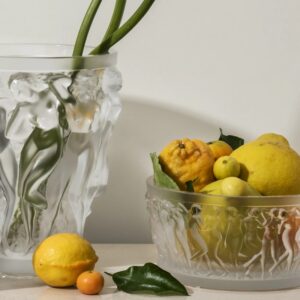
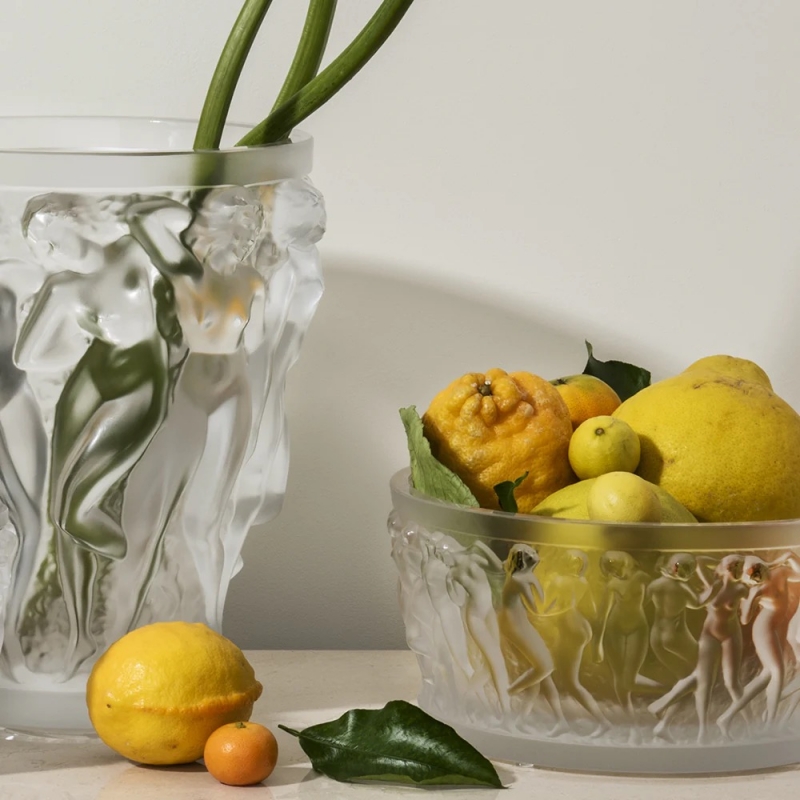
Bacchantes bowl. 1927, René Lalique’s boundless imagination and creative genius lead to the creation of the Bacchantes vase displaying the young priestesses of Bacchus offering their voluptuous beauty and curves. A work of unparalleled beauty, its splendor and sensuality left people spellbound. This vase has become a lasting symbol of Lalique’s celebrated style and remains a top-seller throughout the world. Its meticulous detailing, carved by the hand of a craftsman, adds a playful use of light and dimension.
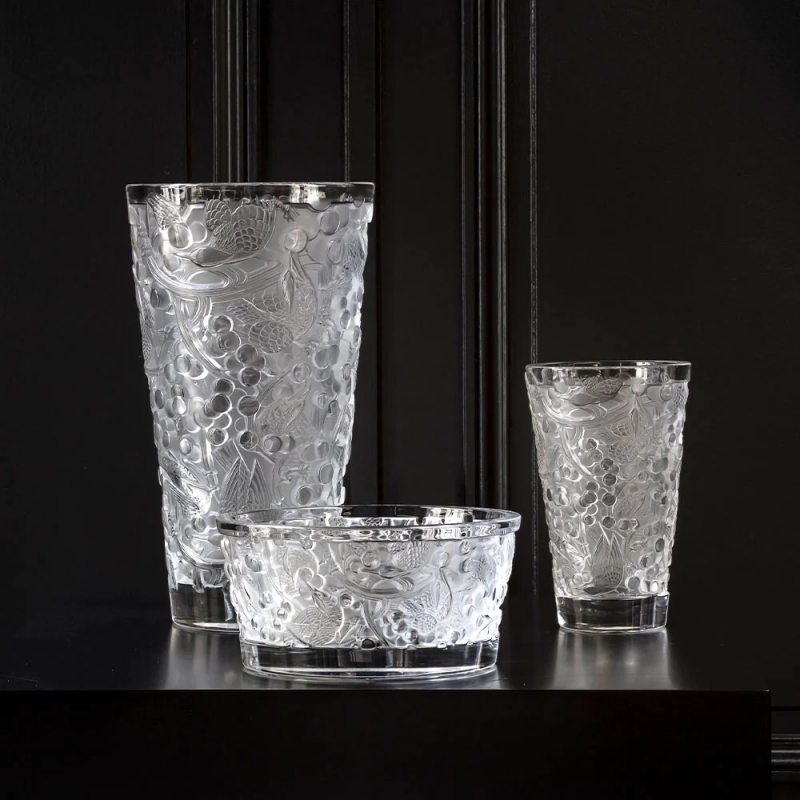
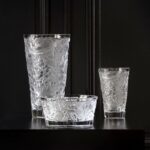
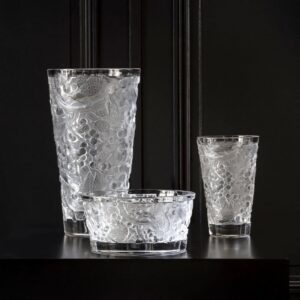
MERLES ET RAISINS bowl. In 1928, RENÉ LALIQUE designed the MERLES & RAISINS decorative panels, originally in created in pressed glass on a silver background and adorned the Cuban mahogany woodwork of the legendary Orient Express. Today, the Lalique Studio reinterprets this emblematic creation, in new expressions through vases and a bowl. The precious cultural heritage of the House thus comes to life in very contemporary shapes. Blackbirds with finely chiseled plumage indulge in an abundance of sweet grapes while the vines create an exceptional rhythm throughout a perfectly balanced composition. The richness of the decor conveys a sensation of profusion and of abundance. Highlighted by the purity of satin-finished crystal, signature of the House, these decorative objects brilliantly illustrate the timeless character of Lalique creations.
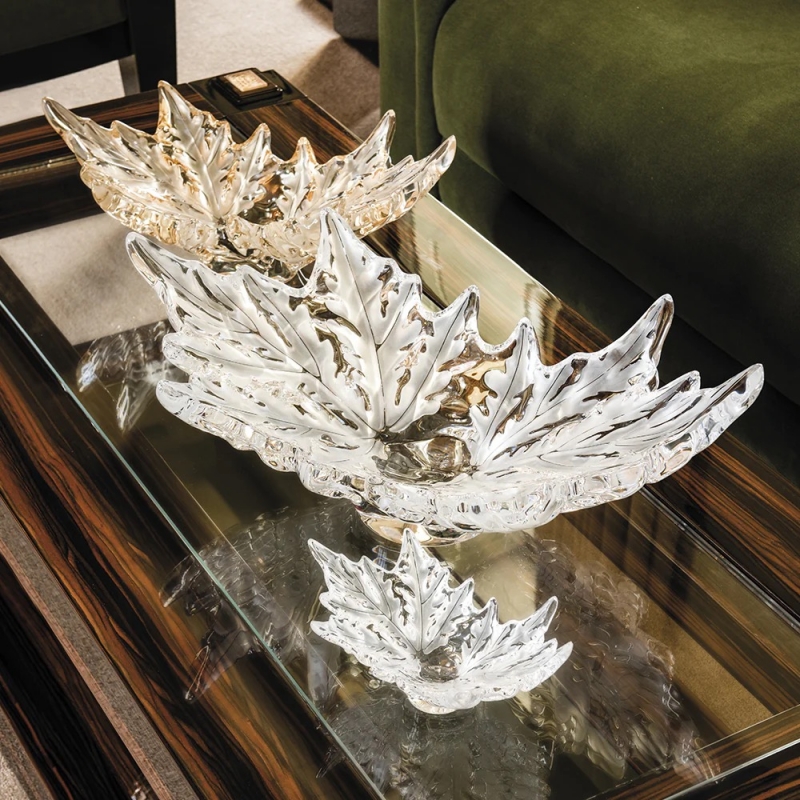
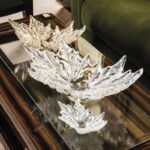
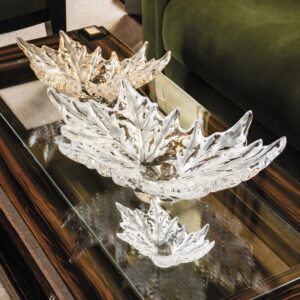
CHAMPS-ÉLYSÉES bowl.The spectacular rows of plane trees lining “the most beautiful Avenue of the World” inspired the design of the finely engraved crystal leaves that adorn the Champs-Elysées bowl, designed by MARC LALIQUE in 1951. This sculpture of light and crystal captures the very essence of Paris. This iconic artwork is now issued in a grand and small version. One of the grand versions is transformed by the manufacturing technique of double gathering.